
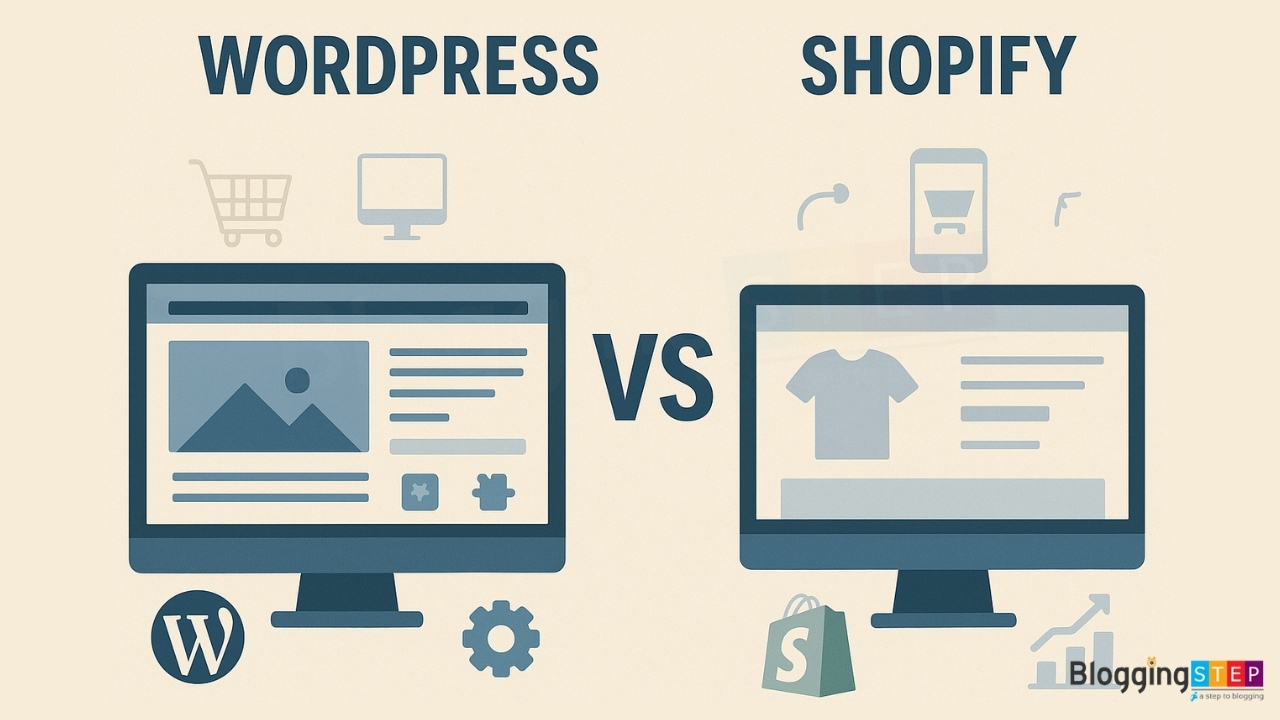
When it comes to building an online store, choosing the right platform is crucial for success. Two of the most popular options today are WordPress (with the WooCommerce plugin) and Shopify. Both platforms (WordPress vs Shopify) offer unique features and benefits, but understanding their differences can help determine which one is the best fit for specific business needs.
This article explores the key differences between WordPress and Shopify, focusing on factors like ease of use, customization, cost, scalability, and support. Whether you’re a beginner or a seasoned business owner, this guide will help make an informed decision about WordPress vs Shopify, and which platform works best for an online store.
Table of Contents
Key Benefits of WordPress vs Shopify for Your Online Store:
When deciding between WordPress and Shopify, it’s important to understand the unique benefits of each platform. WordPress offers complete control and flexibility, making it an ideal choice for those who want a customizable and scalable online store.
On the other hand, Shopify simplifies the e-commerce process with an all-in-one solution, perfect for those who prefer ease of use and less technical involvement. Below are the key benefits of choosing each platform, helping you decide which one is best suited for your business in 2026.
Key Factors to Consider When Choosing Between WordPress and Shopify
If you’re planning to start an online store, one of the first decisions you’ll need to make is which platform to use. When selecting the right platform for your online store, it’s crucial to understand the core differences between WordPress and Shopify. To help you decide, here are some important factors to consider in 2026, from cost and customization to ease of use and scalability.
| Feature | WordPress (WooCommerce) | Shopify |
|---|---|---|
| Ease of Use | Requires more setup and technical knowledge. | User-friendly and designed for beginners. |
| Customization | Highly customizable with plugins and themes. | Limited customization unless using custom code. |
| Cost | Free to use, but requires separate hosting and plugins. | Subscription-based, starting at $39/month. |
| E-Commerce Features | Requires plugins like WooCommerce for e-commerce. | Built specifically for e-commerce with built-in features. |
| SEO | Highly flexible with plugins like Yoast SEO. | Basic SEO features; less flexibility. |
| Security | Requires regular updates and security plugins. | Managed security with automatic updates. |
| Support | No official support, but large community and forums. | 24/7 support via chat, phone, and email. |
| Scalability | Scalable, but requires more management as you grow. | Easily scalable with minimal effort required. |
| Payment Options | Flexible, with numerous payment gateway integrations. | Limited to Shopify’s supported payment gateways. |
| Mobile Optimization | Mobile-optimized themes available. | Mobile-optimized out-of-the-box. |
Ease of Use: Which One is More Beginner-Friendly?
- Shopify: If you’re a beginner or want to get your store up and running quickly without worrying about technical details, Shopify is a great option. It’s designed specifically for e-commerce and is extremely user-friendly. You don’t need to worry about hosting, security, or updates—everything is taken care of for you.
- WordPress (with WooCommerce): WordPress itself is easy to use, but when combined with WooCommerce for e-commerce functionality, it does require more technical setup. While WordPress offers flexibility, it can take a bit longer to configure compared to Shopify, especially for beginners.
Customization & Flexibility: How Much Control Do You Need?
- Shopify: While Shopify is easy to use, it’s somewhat limited when it comes to customization. You can choose from a variety of pre-designed themes and tweak them to match your brand, but you’re limited to the features Shopify provides. Custom coding is possible, but you’ll need some developer expertise to truly customize your store.
- WordPress: WordPress, on the other hand, is incredibly flexible. You have full control over every aspect of your store’s design and functionality. With thousands of themes and plugins, you can customize your store to your exact needs. If you want to create a truly unique website, WordPress gives you the power to do that.
Cost: Which One Fits Your Budget?
- Shopify: Shopify operates on a subscription model. Plans start at $39/month and can go up to $399/month depending on the features you need. This cost includes hosting, SSL, and security, so you don’t have to worry about separate expenses for these services.
- WordPress: WordPress itself is free, but you’ll need to pay for hosting, a domain name, and SSL certificates. Depending on the host you choose, the cost can vary. Budget hosting options can start around $3/month, but if you’re using premium themes and plugins, the cost can increase.
E-Commerce Features: What’s Built-in and What’s Optional?
- Shopify: Shopify is built for e-commerce. It includes a range of powerful features like product management, inventory tracking, payment processing, and shipping integration right out of the box. You also have access to a vast library of apps to extend your store’s functionality.
- WordPress (WooCommerce): WooCommerce is a plugin for WordPress that turns your website into an online store. It’s highly customizable but doesn’t come with as many built-in features as Shopify. For some features, you may need to install additional plugins, such as those for tax management or shipping.
SEO: Which Platform Helps You Rank Better?
- Shopify: Shopify is optimized for SEO and has some solid built-in features like editable meta tags and customizable URLs. However, you may find some limitations when it comes to advanced SEO techniques.
- WordPress: WordPress is often considered the superior platform for SEO. With plugins like Yoast SEO, you can fine-tune every aspect of your site’s SEO and improve your search engine ranking. WordPress also gives you more flexibility when it comes to optimizing your site’s structure and content.
Support: How Will You Get Help?
- Shopify: Shopify offers 24/7 support via chat, phone, and email. Their customer service is highly rated, and they have a large knowledge base to help you troubleshoot any issues.
- WordPress: WordPress doesn’t offer official support, but there are extensive online communities, forums, and tutorials to help you. WooCommerce, the e-commerce plugin, does offer its own support, but if you run into any complex issues, you might need a developer.
Maintenance: Which One Requires More Effort?
- Shopify: Shopify is a fully managed platform, so you don’t need to worry about updates, security patches, or backups. It’s all handled for you.
- WordPress: WordPress requires more maintenance. You’ll need to regularly update your plugins, themes, and WordPress itself. Additionally, you need to monitor your website’s security and perform backups to avoid potential issues.
Scalability: Which One Can Grow With Your Business?
- Shopify: Shopify is built to scale. Whether you’re just starting out or running a multi-million-dollar business, Shopify can handle the growth without much hassle. You can upgrade your plan as needed to accommodate larger inventories or more customers.
- WordPress: WordPress can also scale, but you’ll need to manage your hosting and optimize your site as it grows. If you have a high-traffic store, you may need to upgrade your hosting plan or hire a developer to ensure your site runs smoothly.
Common Myths and Misconceptions
When deciding between WordPress vs Shopify, several misconceptions often arise that can cloud your judgment. It’s essential to address these myths to help you choose the right platform for your online store.
Myth 1: Shopify is only for small businesses
Many people assume that Shopify is best suited for small businesses or startups because of its easy setup and intuitive interface. However, Shopify is a robust, scalable platform that can support large businesses as well. With features like Shopify Plus—designed for enterprise-level stores—Shopify can grow with your business. It handles large inventories, high traffic volumes, and complex order processes with ease. Whether you’re just starting out or have a large-scale operation, Shopify can meet your needs.
Myth 2: WordPress is too complicated for non-technical users
It’s a common belief that WordPress is a technical platform, requiring coding knowledge to manage. While WordPress does offer high customization options, it’s not as difficult to use as some people think. Thanks to drag-and-drop page builders like Elementor and a wide selection of user-friendly themes, even beginners can create a functional e-commerce store without writing any code. Furthermore, a wealth of tutorials, courses, and community support is available to guide you through the process.
Myth 3: Shopify is the best for SEO, and WordPress is not
While Shopify is an e-commerce-focused platform and is designed to make it easy for users to optimize their stores, WordPress with WooCommerce is actually a very strong competitor when it comes to SEO capabilities. In fact, WordPress allows for more SEO flexibility because of plugins like Yoast SEO or RankMath that provide detailed options for on-page SEO, metadata, and keyword optimization. Shopify is good for SEO, but WordPress offers more control, which is a huge advantage for users who want to dive deep into SEO customization.
Myth 4: WordPress is more expensive in the long run
Many people assume that WordPress is more expensive than Shopify because it’s an open-source platform. However, while Shopify has a fixed monthly fee, WordPress offers a more flexible pricing structure. WordPress itself is free, and while you’ll need to pay for hosting, themes, and plugins, the costs can be more manageable in the long term—especially if you are a small or growing business. Shopify’s subscription fees can add up over time, particularly if you opt for the higher-tier plans or additional apps and features.
Myth 5: Shopify is the only platform that offers good customer support
While Shopify offers 24/7 customer support, WordPress has a vast and supportive community of developers, forums, and online resources that can offer you help anytime. The sheer size of the WordPress community means that you’ll find answers to your issues, whether you’re troubleshooting, seeking advice, or looking for tutorials. There are also premium support options available if you want direct assistance, making WordPress just as accessible in terms of customer service.
Myth 6: WordPress is slow
A common myth about WordPress is that it’s inherently slow, particularly for large e-commerce stores. However, speed issues typically arise due to improper hosting or the use of poorly optimized themes and plugins. With the right hosting provider, caching plugins, and a lightweight theme, WordPress can run as fast as any other platform. In fact, WordPress can outperform many platforms if set up correctly, particularly with tools like WP Rocket, Autoptimize, and Cloudflare CDN.
On the other hand, Shopify has built-in speed optimization, but it doesn’t offer the same level of customization or control over performance. The speed of your Shopify store depends largely on the themes and apps you use. If a Shopify store is overloaded with apps, it can also slow down.
Myth 7: WordPress is less secure than Shopify
Another common misconception is that WordPress is not as secure as Shopify. While it’s true that WordPress, being an open-source platform, is more vulnerable to attacks if not properly maintained, it’s important to note that security is customizable in WordPress. Regularly updating plugins, using security plugins like Wordfence, and following basic security practices (like using strong passwords and enabling SSL certificates) can make WordPress as secure as any platform.
Shopify, being a fully managed platform, does handle many security aspects for you, such as updates and SSL certificates, but it’s still important for store owners to ensure they are using trusted apps and themes to avoid vulnerabilities.
Myth 8: Shopify’s transaction fees are lower than WordPress
Many people believe that Shopify has lower transaction fees than WordPress with WooCommerce, but that’s not always the case. While Shopify charges a transaction fee for using third-party payment gateways (usually around 2%–3%), WooCommerce doesn’t charge any additional transaction fees beyond what your payment gateway provider charges. If you use Stripe or PayPal, those are the only fees you’ll incur, which can often be lower than Shopify’s fees. However, if you use Shopify’s built-in payment system (Shopify Payments), the transaction fees are waived.
Future Trends: WordPress vs Shopify in 2026 and Beyond
The world of e-commerce is evolving rapidly, and both WordPress and Shopify are actively adapting to keep pace with new trends and technologies. Here are some of the most exciting future trends to expect from both platforms:
1. AI and Automation Integration
Both WordPress and Shopify are increasingly integrating AI-driven tools to enhance the e-commerce experience. Shopify has introduced features like AI-powered customer service bots and automated inventory management. On the WordPress side, plugins are being developed to integrate AI-powered tools for product recommendations, content optimization, and automated customer interactions. As AI continues to evolve, expect even more personalized and automated e-commerce experiences.
2. Mobile-First E-Commerce
With the rise of mobile shopping, both platforms are investing in mobile-first design. Shopify has introduced mobile-friendly themes and tools like the Shopify Mobile App that allows merchants to manage their store on the go. On WordPress, mobile-responsive WooCommerce themes will continue to dominate, and we can expect more advanced mobile shopping features, including mobile payments and mobile-first product pages.
3. AR (Augmented Reality) and Virtual Try-Ons
The integration of Augmented Reality (AR) is expected to increase significantly in 2025, with both platforms implementing AR tools. Shopify already offers AR features for product displays, allowing customers to visualize products in their own environments. WordPress is also integrating AR through plugins, making it easier for store owners to offer immersive shopping experiences for customers, especially in industries like fashion, home decor, and beauty.
4. Voice Search and Conversational Commerce
As voice search becomes more prominent, both Shopify and WordPress are adapting to support voice-activated shopping. Shopify has already introduced voice-based search in some of its themes and apps. WordPress, through third-party integrations, is also likely to see more conversational commerce tools, where customers can search for products and make purchases using only their voice.
5. Sustainability and Ethical E-Commerce
As environmental consciousness grows, sustainability will be a key focus for e-commerce platforms. Shopify has already made strides in offering eco-friendly shipping options, and WordPress store owners will increasingly integrate features that support sustainable and ethical businesses. This could include green payment gateways, low-carbon shipping options, and eco-friendly packaging solutions.
FAQs – WordPress or Shopify
-
Which platform is easier to use: WordPress or Shopify?
-
Do I need technical knowledge to use WordPress?
-
Can I sell physical and digital products on both platforms?
-
What is the cost difference between WordPress and Shopify?
-
Which platform is better for SEO?
-
Which platform offers better customer support?
-
Can I migrate from Shopify to WordPress or vice versa?
-
Which platform is more secure?
-
Can I use my own domain on both platforms?
-
Which platform is better for scalability as my business grows?
Disclaimer
The information provided in this article is for general informational purposes only. Every effort has been made to ensure the accuracy of the content, but features and pricing for WordPress and Shopify are subject to change. It’s important to conduct independent research and consider specific business requirements before making any decisions. The article may also contain links to external websites that offer paid services or products.
Conclusion
Both WordPress and Shopify are excellent choices for building an online store, but each platform caters to different needs. If ease of use and an all-in-one solution are priorities, Shopify might be the ideal choice. It’s a great option for those who want a simple, no-hassle platform to launch their store quickly. However, if flexibility and customization are more important, and there’s comfort with handling some technical aspects, WordPress with WooCommerce can offer a more personalized experience.
Ultimately, the decision depends on goals, technical expertise, and long-term business needs. Both platforms have their strengths and weaknesses, and the best choice aligns with the vision for the online store.
“Looking for expert help with setting up your WordPress website or e-commerce store? Explore my WordPress services and let me assist you in building a successful online business.”
If you’re just starting your WordPress journey, check out my full collection of beginner-friendly tutorials that make learning easy and fun.